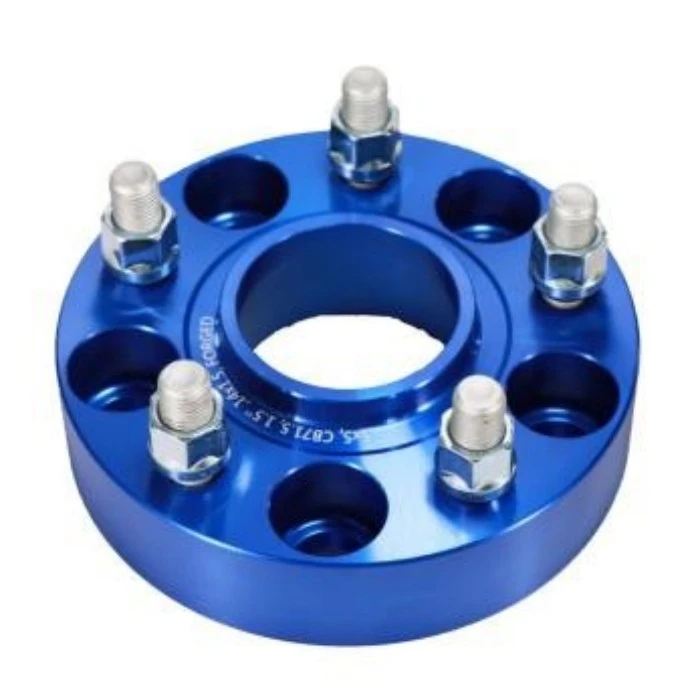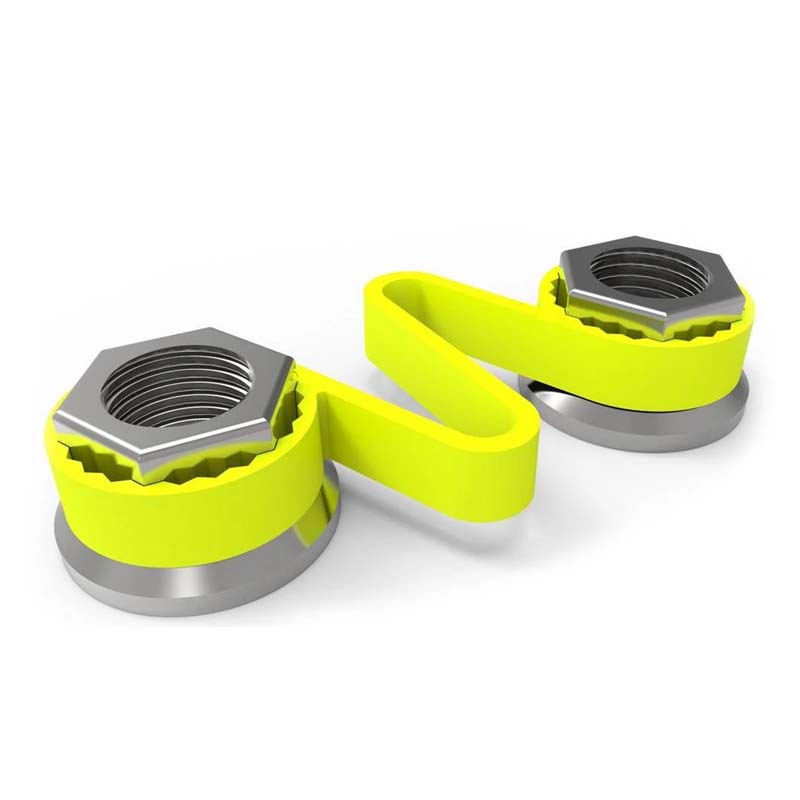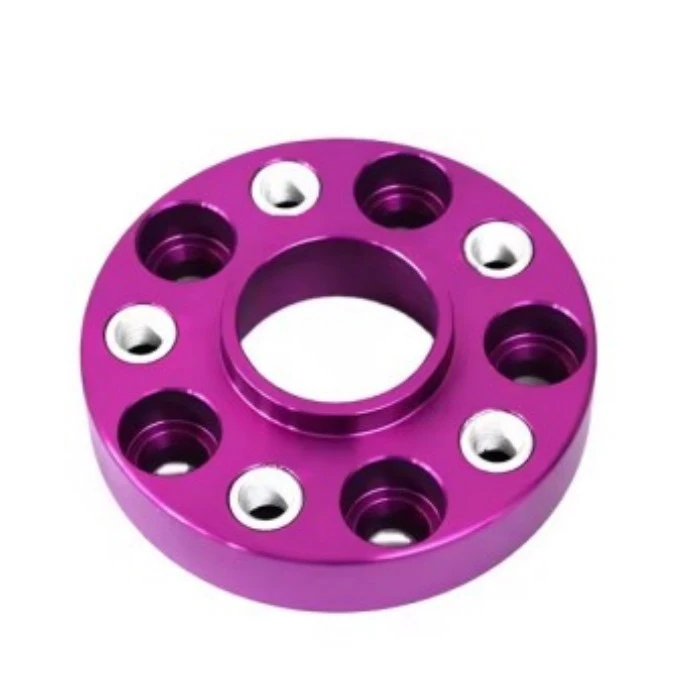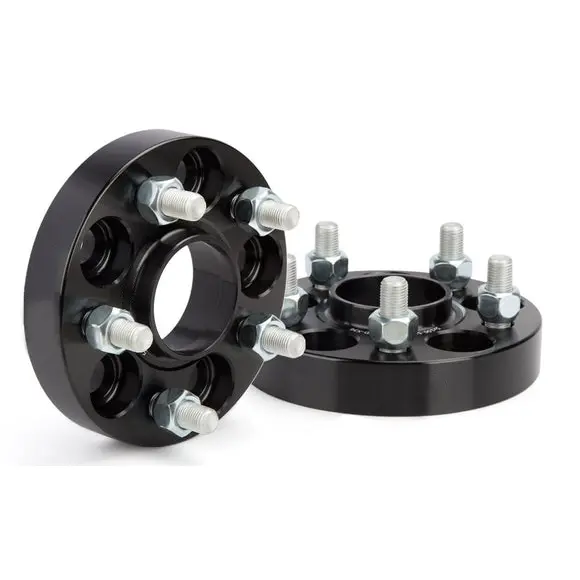
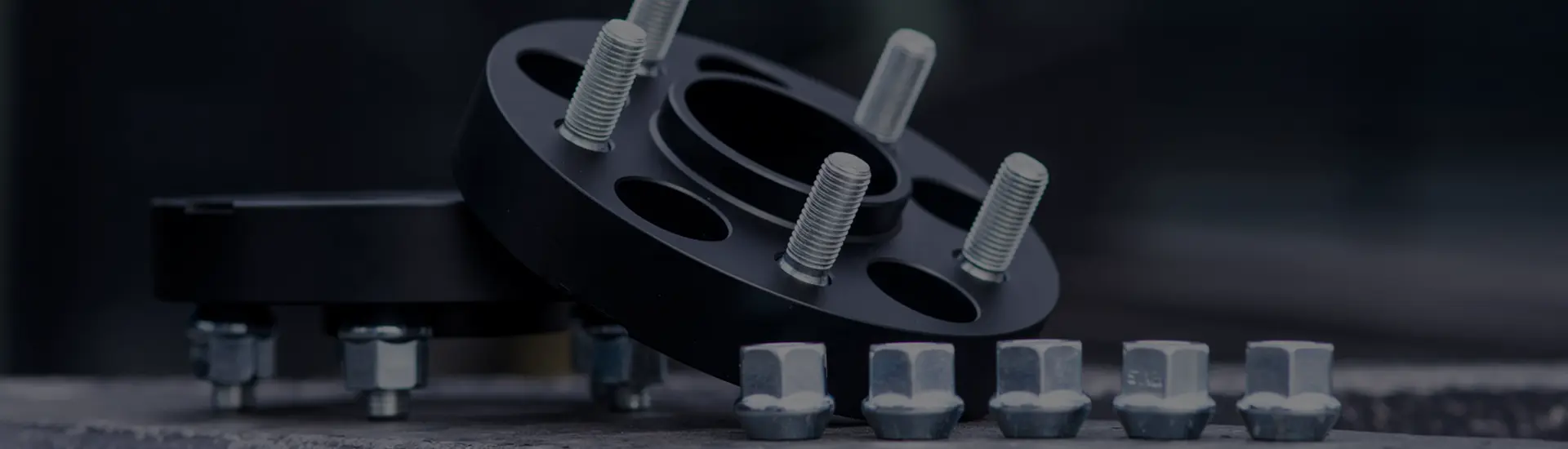

J&W Auto Parts supplies precision-engineered Ford Wheel Spacers Adapter solutions for Ford owners, distributors, tuning shops, and aftermarket businesses. Manufactured from forged 6061-T6 or 7075-T6 aluminum and processed through 800-ton forging and CNC machining, these adapters can be customized for PCD, center bore, thread, thickness, and finish.
A properly specified Ford wheel spacer or adapter can help correct wheel offset, create additional clearance, and accommodate selected aftermarket wheel configurations. However, successful installation depends on much more than spacer thickness. PCD, center bore, thread specification, wheel type, hub engagement, material, machining accuracy, and installation torque all need to be considered together. J&W Auto Parts provides customized hub-centric solutions for Ford Mustang, F-150, Bronco, Ranger, Escape, and other applications, with thickness options from 15–80 mm and custom OEM/ODM support.
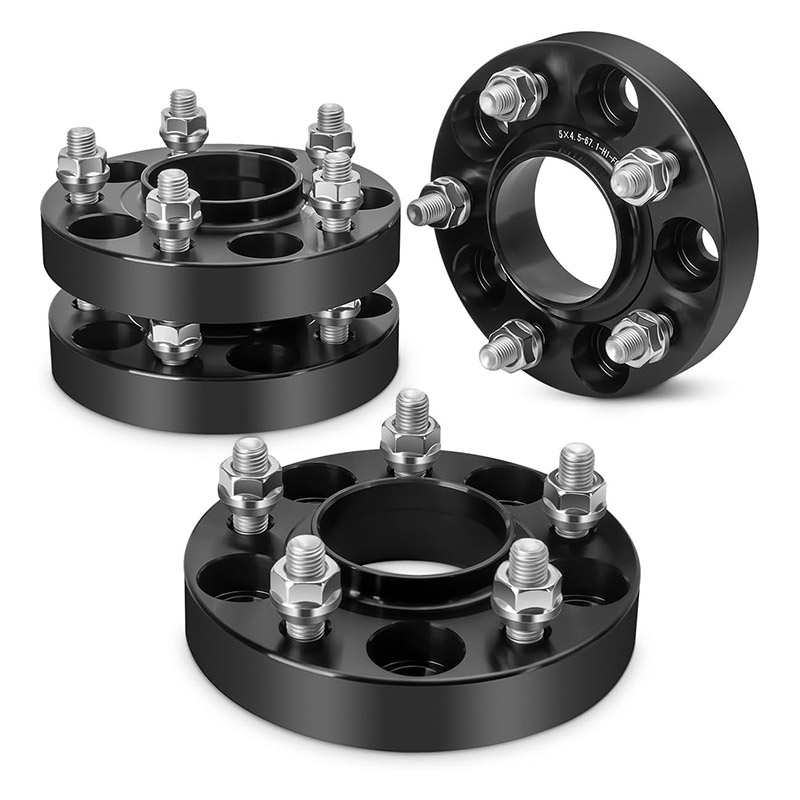
Table of Contents
- What Is a Ford Wheel Spacers Adapter?
- Why Use Wheel Spacers or Adapters on a Ford?
- What Specifications Should Buyers Check?
- Ford Fitment Reference
- 6061-T6 vs. 7075-T6 Aluminum
- Which Type of Wheel Spacer or Adapter Fits Your Application?
- How Should Ford Wheel Spacers Be Installed?
- What Should You Provide When Ordering?
- Frequently Asked Questions
- How to Source Customized Ford Wheel Spacers Adapters
What Is a Ford Wheel Spacers Adapter?
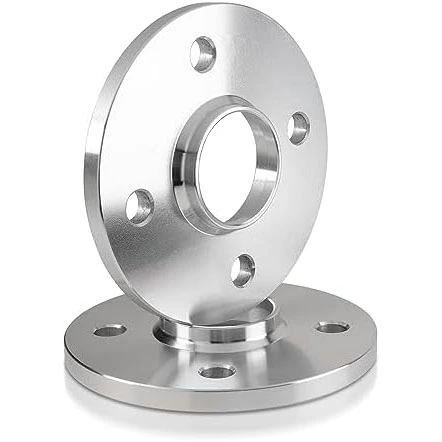
A Ford wheel spacer is a precision-machined component installed between the vehicle hub and wheel to move the wheel outward from its original mounting position. A wheel adapter can perform a similar function while also allowing a different bolt pattern or PCD configuration to be accommodated.
This distinction matters when selecting components for modified vehicles. A spacer is generally selected when the original wheel bolt pattern already matches the vehicle, while an adapter may be required when the wheel and vehicle have different PCD specifications.
For performance builds, lifted trucks, SUVs, and vehicles using aftermarket wheels, the correct component can provide additional space around brake calipers or suspension components while helping achieve the intended wheel position. The final specification should always be based on the vehicle, wheel, hub, and intended operating conditions rather than appearance alone.
Why Use Wheel Spacers or Adapters on a Ford?
Wheel spacers and adapters are commonly used for practical fitment and modification purposes. Their applications include:
- Offset correction: Moving the wheel outward can help achieve a desired wheel position.
- Brake clearance: Additional space may help accommodate larger brake calipers or modified brake systems.
- Suspension clearance: The correct thickness can provide clearance between the wheel and selected suspension components.
- Aftermarket wheel installation: An adapter can accommodate certain differences between the vehicle and wheel bolt patterns.
- Wheel stance adjustment: Moving the wheel outward changes the visual relationship between the tire and wheel arch.
- Specialized vehicle builds: Trucks, SUVs, off-road vehicles, and performance vehicles may require customized fitment dimensions.
Because a spacer changes the wheel's mounting position, buyers should consider more than whether a particular thickness looks suitable. Tire clearance, hub engagement, fastener specifications, suspension geometry, and local vehicle requirements should also be evaluated.
What Specifications Should Buyers Check?
Correct dimensional matching is one of the most important factors when purchasing a wheel spacer or adapter. A component that looks physically similar may still be incompatible because of differences in PCD, center bore, thread size, or mounting configuration.
| Specification | J&W Available Options | Why It Matters |
|---|---|---|
| Material | 6061-T6 / 7075-T6 aluminum | Determines strength, weight, and application suitability |
| Manufacturing | 800-ton forging + CNC machining | Supports structural consistency and dimensional accuracy |
| Thickness | 15–80 mm, customized | Controls wheel position and available clearance |
| PCD | Customized | Must match the vehicle and/or wheel configuration |
| Center Bore | Customized | Helps establish accurate hub-to-wheel alignment |
| Thread | Customized | Must correspond with the vehicle fastening system |
| Surface Finish | Anodizing, electroplating, custom finish | Provides appearance and surface protection options |
| Tolerance | Approximately ±0.01–0.05 mm | Supports precise fitment and batch consistency |
For a custom order, providing the vehicle model, year, PCD, center bore, thread specification, desired thickness, wheel type, and quantity gives the manufacturer the information needed to verify the configuration before production.
Ford Fitment Reference
Ford vehicles use different wheel specifications across models and generations. The following reference illustrates several configurations supplied by J&W Auto Parts. Actual fitment should be confirmed against the specific vehicle and wheel before ordering.
| Ford Model | Year / Generation | PCD | Center Bore | Thread | Reference Thickness |
|---|---|---|---|---|---|
| Mustang | 2015+ | 5×114.3 | 70.5 mm | M14×1.5 | 20–25 mm |
| Ranger | 2019+ | 6×139.7 | 93.1 mm | M12×1.5 | 25–30 mm |
| Bronco | 2021+ | 6×139.7 | 93.1 mm | M12×1.5 | 25–30 mm |
| F-150 | 2015–2020 | 6×135 | 87.1 mm | M14×1.5 | 25–35 mm |
| F-150 | 2021+ | 6×135 | 87.1 mm | M14×1.5 | 25–35 mm |
| Escape | 2013–2022 | 5×10⁸ | 63.4 mm | M12×1.5 | 20 mm |
These figures are reference configurations rather than a substitute for vehicle-specific verification. If a Ford model is not listed, buyers can provide the required OE data or vehicle specifications for dimensional matching.
6061-T6 vs. 7075-T6 Aluminum
Material selection is particularly important for wheel hardware because the component operates under repeated mechanical loads. J&W Auto Parts offers forged 6061-T6 and 7075-T6 aluminum options.
- 6061-T6 aluminum: A practical option for many daily-driving, light-truck, SUV, and standard aftermarket applications. It provides a useful combination of strength, low weight, machinability, and corrosion resistance.
- 7075-T6 aluminum: Offers higher strength characteristics and can be considered for demanding performance, heavy-duty pickup, and off-road applications where the engineering specification calls for it.
Forging followed by CNC machining also allows the component geometry to be controlled according to the required dimensions. J&W reports an 800-ton forging process and CNC machining with dimensional tolerance control of approximately ±0.01–0.05 mm.
Which Type of Wheel Spacer or Adapter Fits Your Application?
Hub-Centric Wheel Spacers
Hub-centric designs use a machined center bore that corresponds to the vehicle hub and wheel configuration. This helps establish concentric alignment and can reduce the possibility of wheel-related vibration when the dimensions are correctly matched.
Lug-Centric Wheel Spacers
Lug-centric designs rely more heavily on the fastener arrangement for centering. They can be appropriate for particular aftermarket configurations, but accurate installation and correct torque become especially important.
Bolt-On Wheel Spacers
Bolt-on spacers are generally used when a greater change in wheel position is required. They incorporate their own mounting hardware and are available in configurations such as 20, 25, 30, and 35 mm, with customized thicknesses also possible.
Wheel Adapters
Wheel adapters can be used when the wheel bolt pattern differs from the vehicle's original PCD. Before selecting an adapter, both the vehicle-side and wheel-side PCD, center bore, thread arrangement, thickness, and load requirements should be confirmed.
How Should Ford Wheel Spacers Be Installed?
Correct installation is as important as product selection. Before mounting a spacer or adapter, inspect the hub, wheel, fasteners, and contact surfaces.
- Confirm the vehicle model, year, PCD, center bore, thread specification, and spacer thickness.
- Clean the wheel hub and mounting surfaces thoroughly.
- Position the spacer or adapter flush against the vehicle hub.
- Check that there are no gaps between the mating surfaces.
- Tighten the fasteners in a star or crisscross pattern.
- Use a calibrated torque wrench and follow the vehicle or component manufacturer's specified torque.
- Check wheel and tire clearance before normal driving.
- Perform a short test drive and re-check the installation according to the manufacturer's instructions.
Do not stack multiple spacers to obtain a combined thickness. A single correctly engineered component is preferable to combining separate spacers because stacking can alter load distribution and mounting geometry.
If vibration, unusual noise, tire rubbing, uneven wheel rotation, brake interference, or a loose-wheel sensation occurs after installation, stop driving and have the installation inspected by a qualified technician.
What Should You Provide When Ordering?
For wholesale, OEM, ODM, or custom projects, accurate technical information can significantly simplify product confirmation and reduce fitment errors.
- Ford vehicle model
- Model year or generation
- VIN, when available
- Vehicle PCD / bolt pattern
- Wheel PCD, if an adapter is required
- Vehicle and wheel center bore dimensions
- Thread specification
- Required thickness
- OEM or aftermarket wheel information
- 6061-T6 or 7075-T6 material preference
- Color or surface finish
- Required quantity and packaging requirements
For distributors and automotive aftermarket businesses, providing these details at the RFQ stage allows the manufacturer to confirm dimensions, discuss customization, and prepare an appropriate production solution.
Frequently Asked Questions
What is the difference between a Ford wheel spacer and a wheel adapter?
A wheel spacer primarily changes the wheel's mounting position by moving it outward. A wheel adapter can also change the bolt pattern, allowing certain wheels with a different PCD to be fitted to a vehicle when the complete configuration is properly engineered.
What Ford models can use customized wheel spacers?
J&W Auto Parts lists applications for Ford Mustang, Ranger, F-150, Raptor, Bronco, Escape, and Kuga. Custom configurations can also be developed when customers provide the required vehicle and wheel dimensions.
What thicknesses are available?
J&W Auto Parts supports customized thicknesses from approximately 15–80 mm. The appropriate thickness should be determined from wheel offset, tire clearance, brake clearance, suspension geometry, hub engagement, and the intended application rather than appearance alone.
Are Ford wheel spacers available in 6061-T6 and 7075-T6 aluminum?
Yes. J&W Auto Parts offers forged 6061-T6 and 7075-T6 aluminum options. The appropriate alloy depends on the vehicle, loading conditions, intended use, and engineering requirements.
Can I stack two wheel spacers to achieve a larger offset?
No. Stacking spacers can change load distribution and mounting geometry and may increase installation risk. A single spacer or adapter manufactured to the required thickness is the more appropriate approach.
Does a wheel spacer automatically make a Ford safer or improve handling?
No component should be assumed to improve safety or handling simply because it changes wheel position. The effect depends on the vehicle setup, spacer dimensions, wheel and tire combination, suspension geometry, installation quality, and operating conditions. Proper engineering and installation are essential.
Can J&W Auto Parts provide OEM or ODM wheel spacer solutions?
Yes. J&W Auto Parts supports OEM and ODM projects and can customize dimensions, PCD, center bore, thread, thickness, material, color, and packaging according to project requirements.
How to Source Customized Ford Wheel Spacers Adapters
For distributors, wholesalers, tuning businesses, repair shops, and aftermarket brands, choosing a manufacturer capable of handling both standard and customized specifications can simplify sourcing. J&W Auto Parts combines forged aluminum production, CNC machining, dimensional control, and OEM/ODM customization for Ford wheel spacer and adapter applications. Share your Ford model, year, PCD, center bore, thread, required thickness, material preference, and order quantity to start a fitment review. For customized specifications, bulk purchasing, or OEM/ODM cooperation, contact us with your requirements and let J&W Auto Parts help develop a wheel spacer adapter solution matched to your application.