Email
WhatsApp

Vehicle Fitment Guides
JK, JL, JT and TJ don't share the same hardware — and the difference is the reason a lot of Jeep owners end up with a box that won't bolt on. Here's the fitment, straight from the shop floor.
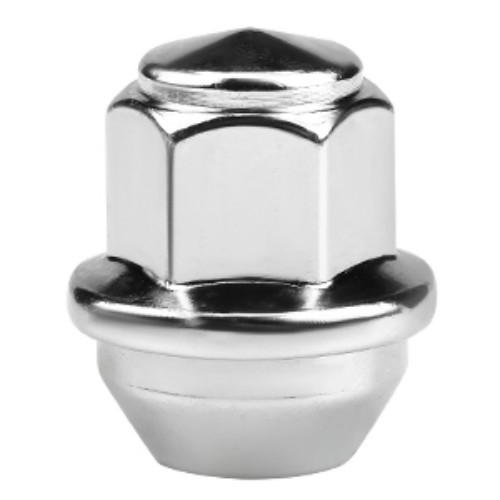
Every modern Wrangler runs a 5x127 mm (5x5") bolt pattern with a 71.5 mm hub bore — but the thread is not the same. The JL and Gladiator JT use M14x1.5, while the JK uses 1/2"-20 UNF. Match your generation before you order, and choose a hub-centric spacer to keep the wheel running true.
| Generation | Bolt pattern (PCD) | Hub bore | Thread |
|---|---|---|---|
| Wrangler JL (2018–2026) | 5x127 (5x5") | 71.5 mm | M14 x 1.5 |
| Gladiator JT (2019–2026) | 5x127 (5x5") | 71.5 mm | M14 x 1.5 |
| Wrangler JK / JKU (2007–2018) | 5x127 (5x5") | 71.5 mm | 1/2" - 20 UNF |
| Wrangler TJ / YJ (1987–2006) | 5x114.3 (5x4.5") | 71.5 mm | 1/2" - 20 UNF |
That one detail causes more returns than anything else on Jeep orders. The listing says "fits Wrangler," the buyer sees 5x5 and 71.5, and the nuts don't thread on. Now let's cover the rest of the decision — how thick you can safely go, why hub-centric matters on a Jeep in particular, and how to torque it.

On a Jeep it's rarely about stance alone. The Wrangler leaves the factory with a fairly high offset — roughly +44 mm on JK and JL — which tucks the wheels well inside the fenders.[3] Push them back out and you gain the clearance that a lifted, big-tire build actually needs:
What size wheel spacers do I need for a Jeep Wrangler?
Most Wrangler builds run 1 to 1.5 inches (25–38 mm) per side; 2 inches (50 mm) suits wide-tire and heavily lifted setups. The right number depends on your tire size, lift, and wheel offset — measure fender-to-tire clearance rather than copying someone else's build.
Thickness is a clearance calculation, not a fashion pick. Every millimetre of spacer reduces your effective wheel offset by the same amount, which is what moves the tire outward:
| Thickness | Typical build | Notes |
|---|---|---|
| 25 mm (1") | Stock to mild lift, 33" tires | Subtle stance gain, minimal rub risk |
| 32–38 mm (1.25–1.5") | 2–3" lift, 35" tires | The most common Wrangler setup |
| 50 mm (2") | Heavy lift, 37"+ tires | Check fender flare coverage and local law |
Two things to check before committing to a number: whether the tire still clears at full steering lock with the suspension compressed, and whether your flares still cover the tread — many regions require it. Wider track also puts a little more leverage on the wheel bearing, so pick the thickness your build needs rather than the widest that bolts up.
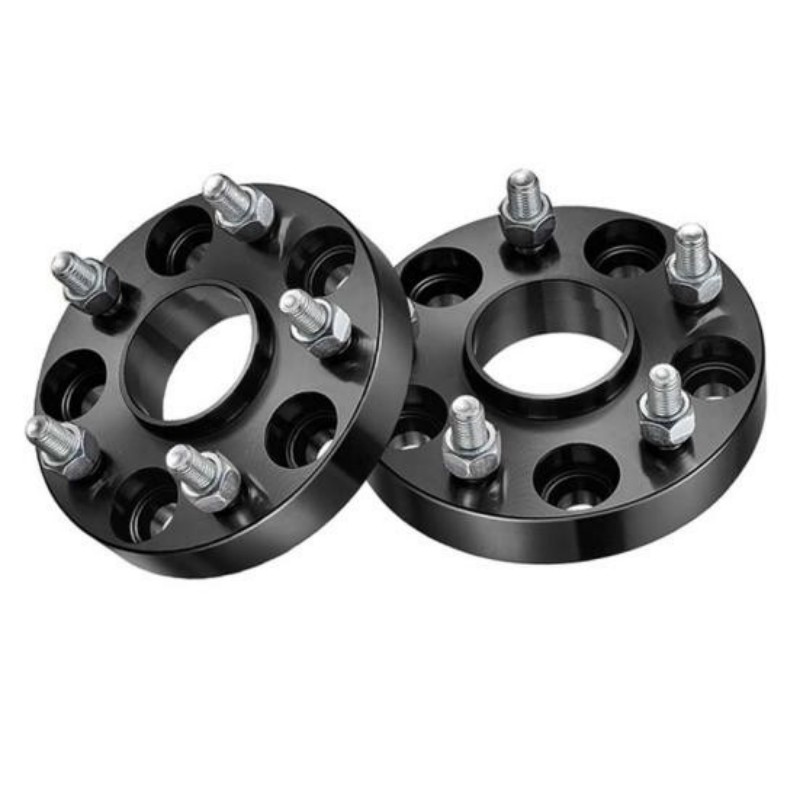
At Wrangler thicknesses, this isn't really a choice. A slip-on spacer slides over your existing studs, which means the further out you go, the less thread is left for the lug nut to grab. At 25 mm and beyond you want a bolt-on adapter: it bolts to the hub with your original studs, and carries its own pressed-in studs for the wheel. Two independent connections, neither one running short on engagement.
Are wheel spacers safe on a Jeep Wrangler?
Yes, when they're hub-centric, forged, and bolt-on at Jeep thicknesses. Jeeps see high load and impact off-road, so forged 6061-T6 or 7075-T6 with Grade 12.9 studs, correct torque, and a re-torque after the first 50–100 miles are what keep them reliable.
Material matters more on a Jeep than on a street car, because trail impacts and heavy tires load the part harder. Forged 6061-T6 handles most builds; 7075-T6 is the pick for 37s, heavy bumpers, and hard trail use. Our full breakdown of what makes a spacer sound is in the guide on whether wheel spacers are safe.
All these Jeeps share a 71.5 mm hub bore, and a spacer machined to sit on it lets the hub carry the load and center the wheel — instead of leaving that job to the studs.[4] On a heavy vehicle wearing 35-inch tires, that distinction shows up fast: a wheel that isn't centered gives you a steering shimmy at highway speed that no amount of rebalancing will cure.
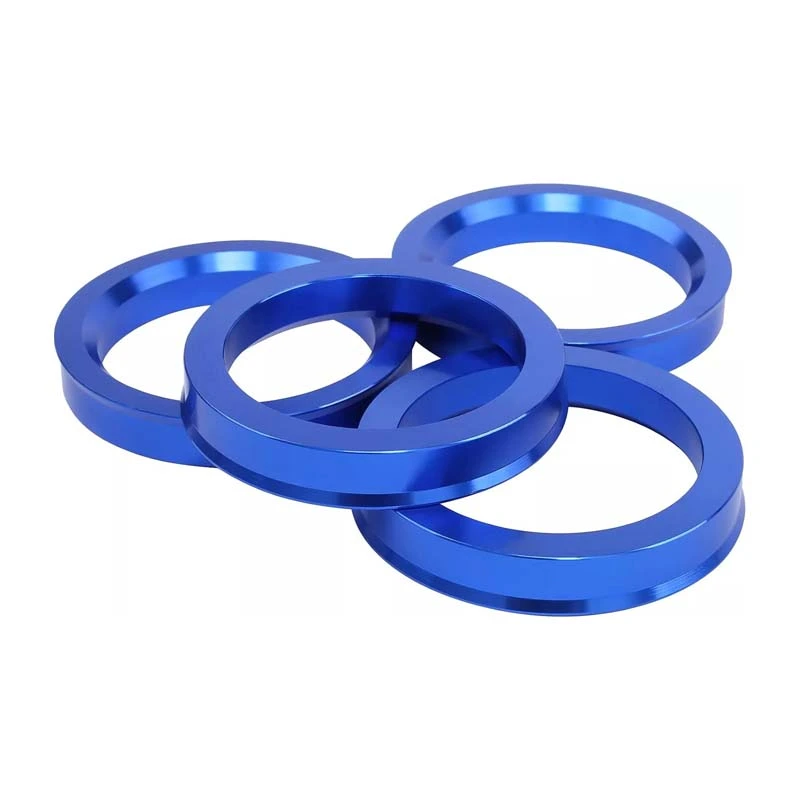
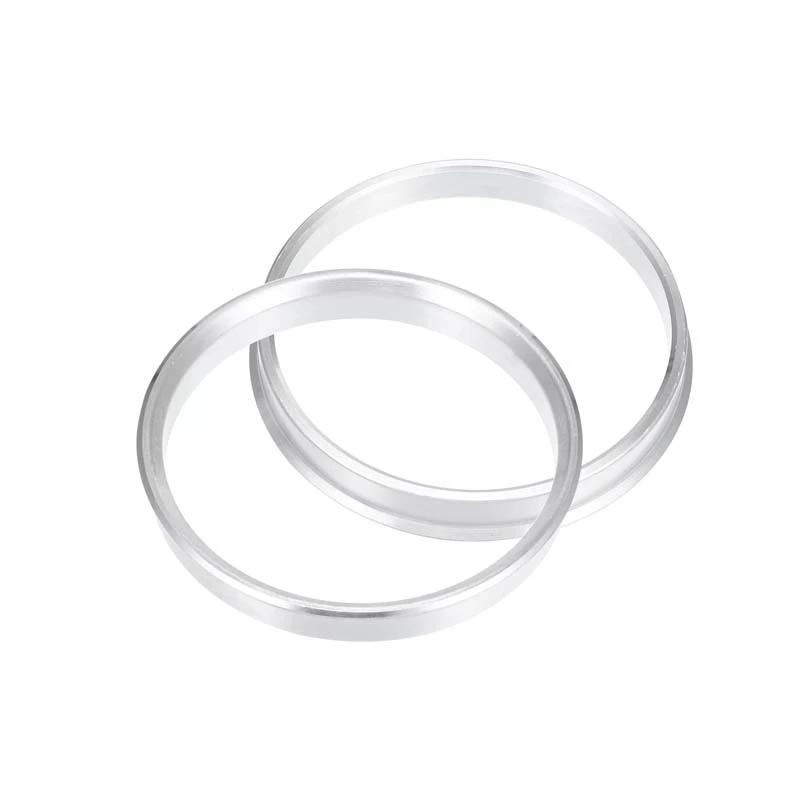
If your aftermarket wheels have a bore larger than 71.5 mm, add hub-centric rings to close the gap. And if you want the full comparison, we cover it in hub-centric vs lug-centric spacers.
Nothing exotic here, but the Jeep-specific steps matter:
JK, JL, and Gladiator JT all use 5x127 mm (5x5") with a 71.5 mm hub bore. Older TJ and YJ Wranglers use 5x114.3 mm (5x4.5"). Bolt pattern alone doesn't confirm fitment — the stud thread differs between generations.
No. Both share the 5x127 pattern and 71.5 mm bore, but the JK uses 1/2"-20 UNF studs while the JL and JT use M14x1.5. The hardware won't thread, so order by generation rather than by bolt pattern.
Not when they're hub-centric, forged, and torqued correctly. Very wide spacers add leverage on the wheel bearing over time, and a wider track can expose tire beyond the flare. Pick the thickness your tire and lift actually need.
Often yes, depending on wheel offset and lift. With factory-offset wheels, 35s can contact control arms or the inner fender at full lock. A 32–38 mm spacer is the common fix — but measure your own clearance before choosing.
Around 85–95 ft-lbs for the wheel on most Wranglers, applied in a star pattern with a calibrated torque wrench. Torque the adapter to the hub separately to spec, and re-torque everything after the first 50–100 miles.
Yes, on heavily lifted builds running 37 inch tires, using bolt-on adapters with their own studs. Confirm the tire still clears at full lock, check that flares cover the tread for your local rules, and use forged 7075-T6 for hard trail use.
The bottom line
5x127 and a 71.5 mm bore cover JK, JL and JT — but the studs don't. Confirm M14x1.5 or 1/2"-20 first, choose hub-centric and bolt-on at Jeep thicknesses, and torque it properly. We forge Jeep spacer adapters per generation under IATF 16949, in thicknesses from 25 to 75 mm.
Specifications vary by year, trim, and market. Confirm your Wrangler's bolt pattern, hub bore, stud thread, and torque spec against the vehicle before ordering or fitting. Check local regulations on tire coverage before running wide spacers.