Email
WhatsApp

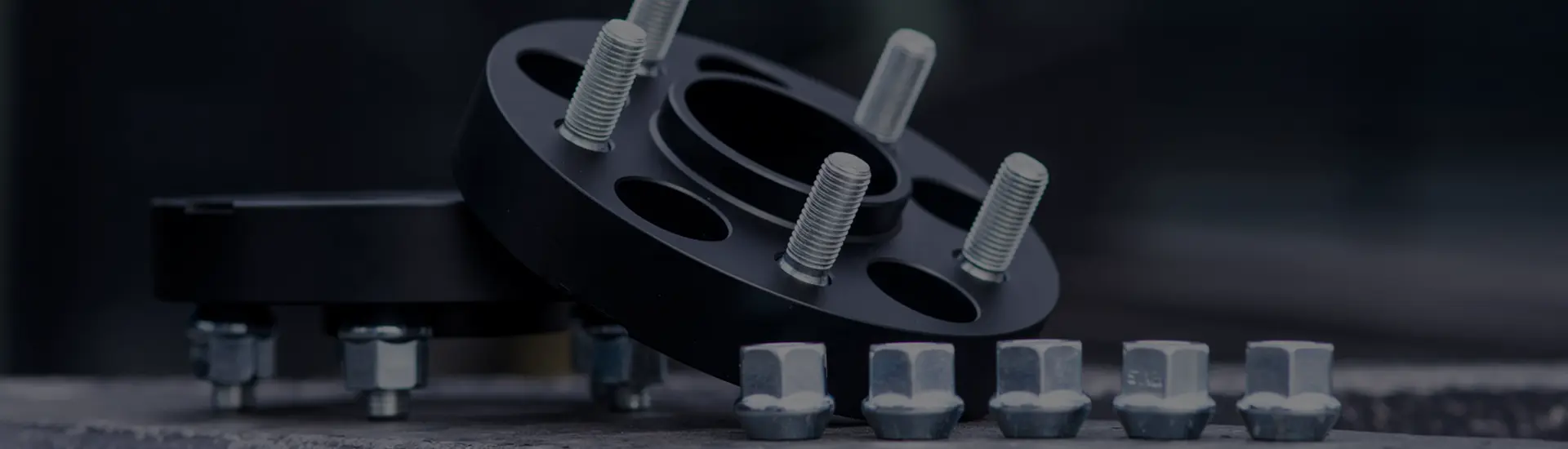

A straight answer for tuners, off-roaders, and distributors — plus the four engineering factors that separate a safe spacer from a dangerous one.
Yes — wheel spacers are safe when they are hub-centric, forged from quality aluminum (6061-T6 or 7075-T6), correctly sized for your hub bore and bolt pattern, and installed with full thread engagement and the proper torque. Failures almost always trace back to cheap cast material, the wrong center bore, or bad installation — not the concept itself.
| Factor | Safe spacer | Risky spacer |
|---|---|---|
| Centering | Hub-centric — hub carries the load | Lug-centric — studs carry the load |
| Material | Forged 6061-T6 / 7075-T6 aluminum | Gravity-cast, unknown alloy |
| Fit | Center bore & PCD matched to vehicle | "Universal" bore, loose fit |
| Hardware | Grade 12.9 studs, correct thread pitch | Soft or mismatched studs |
| Install | Torqued to spec, re-torqued after 50–100 mi | Impact-gun only, never re-checked |
| Result | Stable, vibration-free, OEM-like | Vibration, stud fatigue, risk |
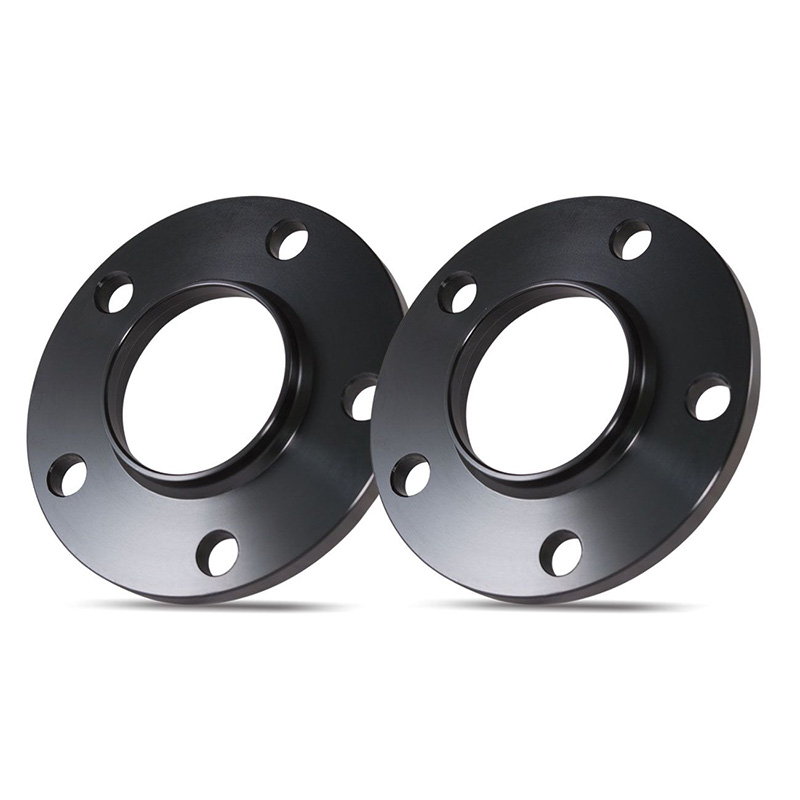
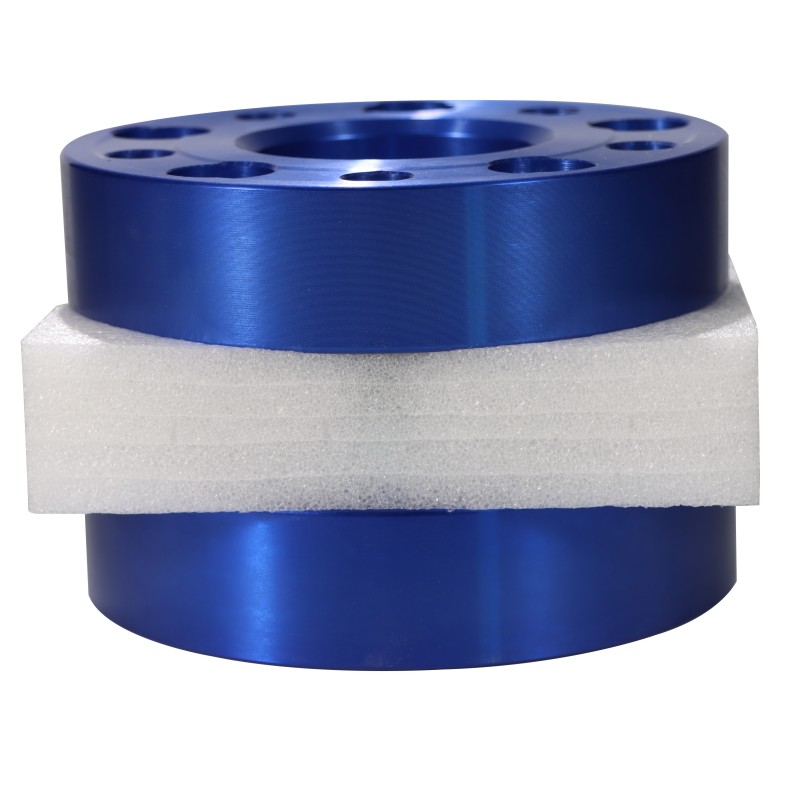
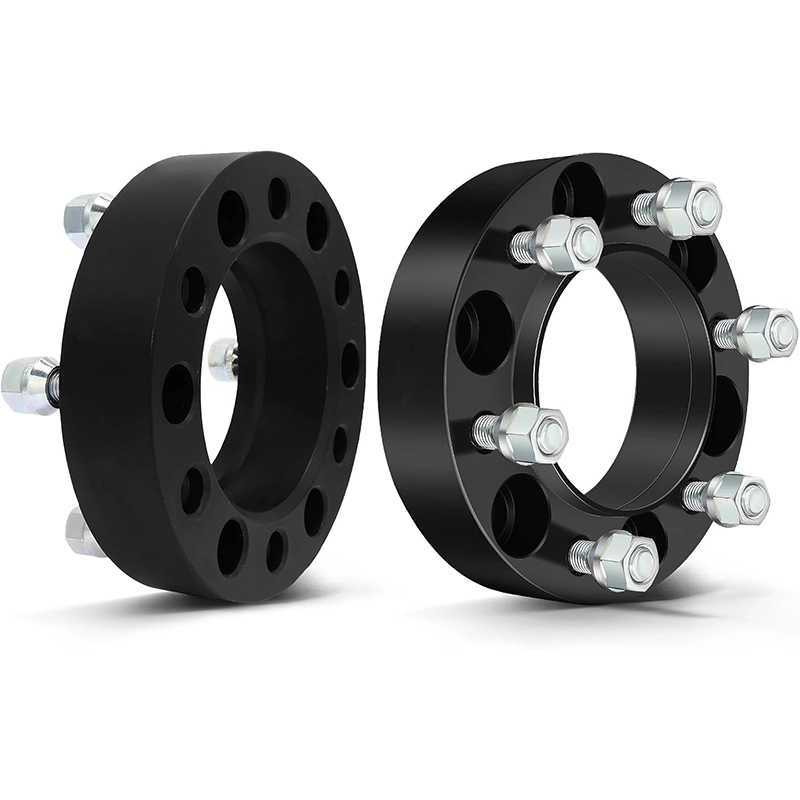
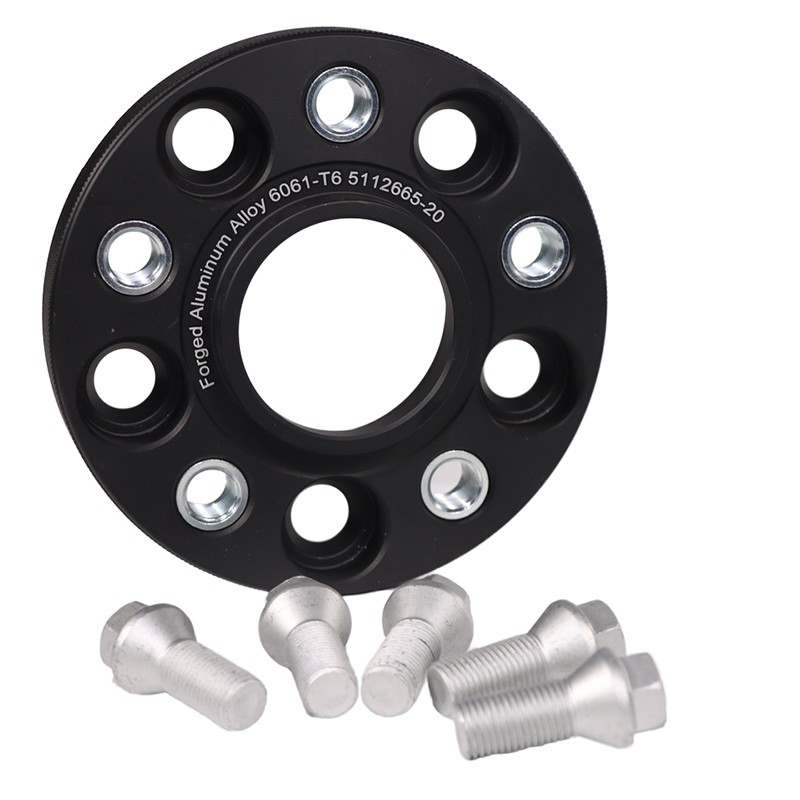
A wheel spacer is a machined ring that mounts between the vehicle hub and the wheel, pushing the wheel outward by a fixed amount. Drivers use them to widen track for a more stable stance, clear larger brake calipers or wider tires, and correct aftermarket wheel offset.
Because a spacer sits directly in the load path between hub and wheel, its design and quality are safety-critical. That is exactly why "are wheel spacers safe" is one of the most-searched questions in wheel fitment — and why the honest answer depends on the four factors below, not on the part category as a whole.
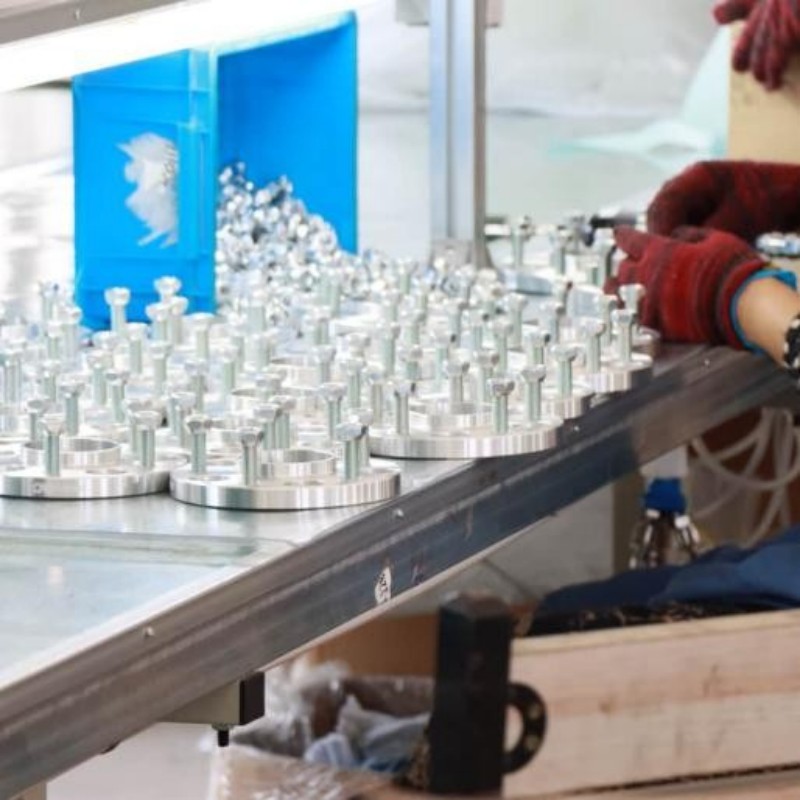
Every safe installation gets four things right. Miss one and risk climbs sharply; get all four and spacers are a reliable, widely-used upgrade.
This is the single most important factor. A hub-centric spacer has a machined lip that matches your hub bore exactly, so the hub carries the vehicle's weight and keeps the wheel perfectly centered. A lug-centric spacer relies only on the lug hardware to center and support the wheel, which shifts shear load onto the studs and invites vibration.
Are hub-centric wheel spacers safer than lug-centric?
Yes. Hub-centric spacers let the hub bear the load and center the wheel, reducing vibration and stud stress. They mirror OEM fitment principles and are the recommended choice for safety and ride quality.
| Behavior | Hub-centric | Lug-centric |
|---|---|---|
| Load bearing | Carried by the center hub lip | Carried directly by the wheel studs |
| Stud stress | Shear stress designed out | Higher stud fatigue under load |
| Ride quality | Minimal radial runout, stable at speed | More prone to steering vibration |
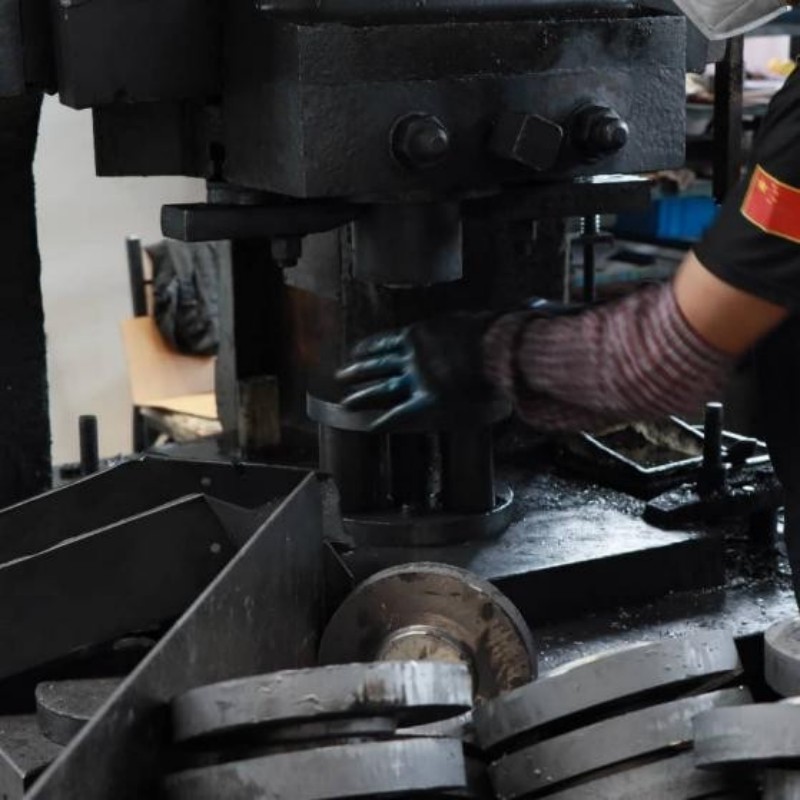
Not all aluminum is equal. Safe spacers are forged from aircraft-grade alloy, which resists fatigue far better than porous gravity castings that can hide weak points. The two workhorse alloys are 6061-T6 for daily driving and light trucks, and 7075-T6 for heavy pickups, racing, and demanding off-road use.
The strength gap is real and measurable. In the T6 temper, 7075 delivers a tensile strength around 572 MPa versus roughly 310 MPa for 6061 — close to double — with a matching jump in yield and shear strength.[1][2] That is why 7075 is chosen where impact and fatigue loads are highest.
| Property | 7075-T6 | 6061-T6 | Best for |
|---|---|---|---|
| Tensile strength | ~572 MPa | ~310 MPa | 7075: heavy-duty / racing |
| Yield strength | ~503 MPa | ~276 MPa | 7075: high impact loads |
| Shear strength | ~331 MPa | ~207 MPa | 7075: towing / off-road |
| Corrosion resistance | Good | Excellent | 6061: street / wet climates |
Look for suppliers with recognized quality systems (IATF 16949, ISO 9001), material traceability, CNC-machined faces held to tight flatness — J&W machines parallelism and flatness to within ±0.02 mm — and a salt-spray-tested anodized finish. Explore our forged aluminum wheel spacers for the full spec range.
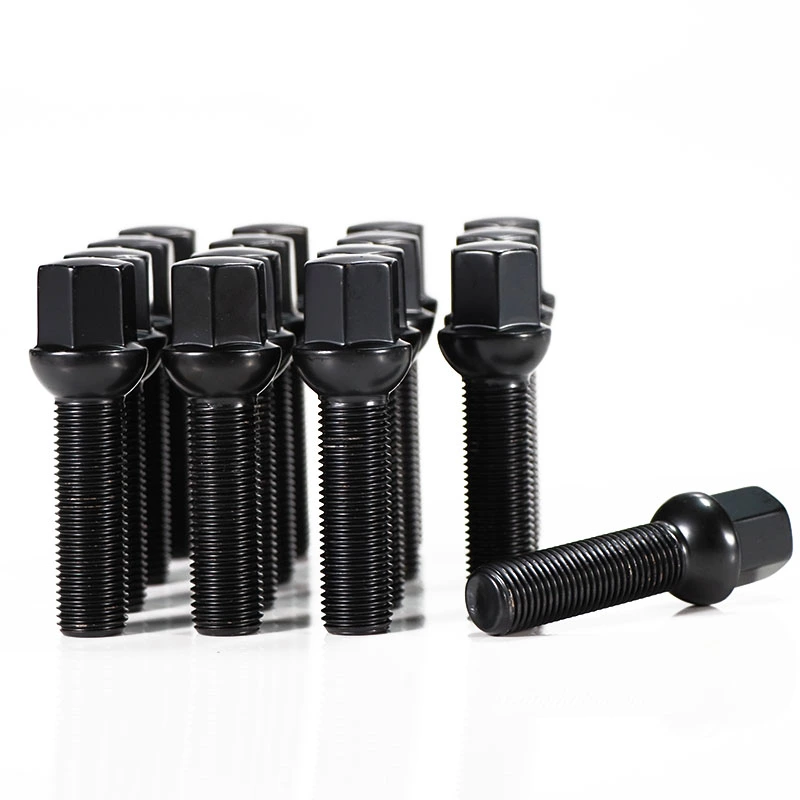
Thickness itself is not the danger — losing thread engagement is. As a spacer pushes the wheel outward, your original studs have less thread left to grab the lug nut. There are two ways to handle this:
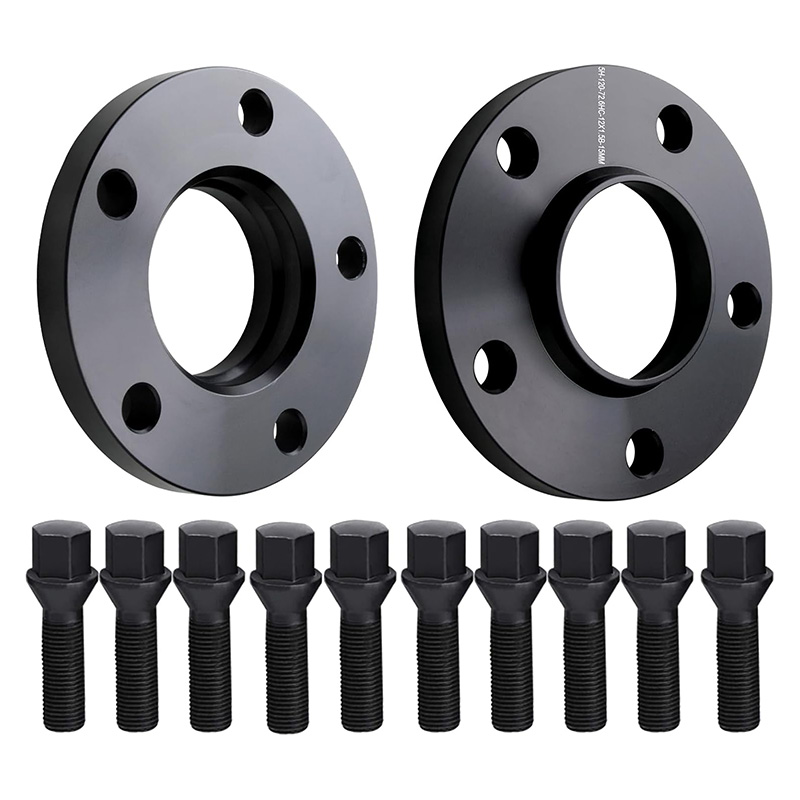
For anything beyond a few millimeters, bolt-on wheel spacer adapters are the safer path because they never compromise engagement. J&W builds them in thicknesses from 3 mm to 75 mm with Grade 12.9 studs.
Even a perfect spacer is unsafe if installed poorly. Mating surfaces must be clean and rust-free, hardware must be torqued to your vehicle's spec in a star pattern with a calibrated torque wrench — not an impact gun — and, critically, you must re-torque after the first 50–100 miles (80–160 km) once everything has seated. Skipping the re-torque is one of the most common causes of loose wheels after a spacer install.
Do wheel spacers damage your vehicle?
No — hub-centric spacers of reasonable thickness, correctly installed, do not damage your vehicle. Very wide spacers increase leverage on the wheel bearing over time, so choose an appropriate width for your build rather than the maximum you can fit.
When chosen and installed correctly, spacers do not harm your car. There are real trade-offs to understand, though:
None of these are reasons to avoid spacers outright. They are reasons to pick an appropriate thickness rather than the widest that will bolt up.
There is no single "safe" number — it depends on your hardware and your fenders. Use the shop-standard fender-to-tire gap test to find your ceiling:
Then match the mounting type to the thickness: thin gains use slip-on spacers (if engagement holds), while larger gains should always use bolt-on adapters. Our fitment database covers 1,500+ vehicle platforms — here are a few common wholesale specs:
| Platform | PCD | Center bore | Thread | Stock thickness |
|---|---|---|---|---|
| Ford Mustang | 5x114.3 | 70.5 mm | M14x1.5 | 20 / 25 / 30 mm |
| Ford F-150 / Raptor | 6x135 | 87.1 mm | M14x1.5 | 25 / 38 / 50 mm |
| Jeep Wrangler JL | 5x127 | 71.5 mm | M14x1.5 | 32 / 38 / 50 mm |
| Toyota Tacoma / Hilux | 6x139.7 | 106 mm | M12x1.5 | 25 / 30 / 38 mm |
A safe install is a repeatable sequence. Follow it every time:
Yes. Hub-centric, forged spacers that are correctly sized and torqued are safe for daily use. The keys are matching the hub bore, keeping full thread engagement, and re-torquing after the first 50–100 miles once the assembly has seated.
Yes, when engineered from forged 6061-T6 or 7075-T6 aluminum with a true hub-centric design. Studs must reach correct thread engagement — typically 6.5 to 8 full turns depending on pitch — and be torqued to factory spec with a calibrated wrench, not an impact gun.
There is no single number; it depends on your studs and fenders. Thin slip-on spacers are fine if enough thread engages the lug nuts. For more width, use bolt-on adapters with their own studs so engagement is never compromised, and check fender clearance first.
Properly matched hub-centric spacers do not cause vibration, because the hub keeps the wheel centered. Vibration usually comes from lug-centric spacers, an incorrect center bore, dirty mounting surfaces, or a part machined outside flatness tolerance.
Reasonable spacer thickness has a negligible effect on bearings. Very wide spacers increase leverage on the bearing over time, so choose an appropriate width for your application rather than the maximum that will fit, especially on heavy or frequently-loaded vehicles.
Yes. Forged aluminum resists fatigue and cracking far better than gravity-cast parts, which can contain porosity and hidden weak points. For a component sitting in the wheel's load path, forged 6061-T6 or 7075-T6 is the safer, more consistent choice.
The bottom line
Hub-centric design, forged material, full thread engagement, and correct torque. Get all four right and wheel spacers are a proven upgrade. As an IATF 16949-certified manufacturer, J&W Auto Parts forges hub-centric spacers and adapters engineered for precise, safe track-width upgrades.
This guide is for general information. Torque values, thread-engagement counts, and spacer thickness must be validated for your specific vehicle, hardware, and load before driving. When in doubt, consult your vehicle's service manual or a qualified technician.